

A founder hits $1.2M in revenue and suddenly can’t take a vacation without the business wobbling. Every decision routes through them. This is where the right management consulting skills stop being abstract. Structured problem-solving, analytical thinking, and clear communication start deciding whether a company scales or stalls. This article breaks down which skills matter most. It shows how a fractional COO applies them to your operations as you scale past $1M in revenue, and what that costs versus a traditional consultant.

What management consulting skills actually solve for founders
Most founders don’t fail from lack of effort. They stall because growth breaks the systems that got them to $1M. Nobody inside the business has the skills to redesign those systems. That’s the real gap management consulting skills fill.
The core function is diagnosis. A management consultant looks at a messy operation and separates the actual constraint from the noise. Maybe it’s a broken handoff between sales and fulfillment. Maybe it’s a founder still approving every invoice. Consulting skills convert founder overwhelm into a specific, fixable problem list. If you’re weighing outside help, understanding what makes a good management consultant is a useful starting point for spotting the difference between insight and busywork.
Many founders assume these skills only apply to large corporations. In reality, small business founders benefit more, because they usually have zero internal operational leadership. The reason the gap hurts small firms harder is structural: a corporation has managers whose whole job is process design, while a founder is doing that work on top of everything else, or not at all. According to the U.S. Small Business Administration, growing firms most often stumble in managing finances and operations. Strong problem-solving and analytical thinking are what turn that stumble into structure.
Core management consulting skills a fractional COO brings (problem-solving, analytical thinking, communication)
Three skills carry most of the weight: structured problem-solving, analytical thinking, and communication skills. Technical abilities like Excel modeling and financial analysis support these. They don’t replace them.
Problem solving means breaking a tangled situation into parts you can act on. Analytical thinking means reading the numbers and spotting the pattern behind the symptom, not just the symptom itself. Communication skills tie it together. A brilliant analysis nobody understands changes nothing.
Communication matters this much for mechanical reasons. Operational change requires your team to do things differently. They won’t change behavior around a plan they can’t follow. A good management consultant explains the “why” in plain language. That’s why the Harvard Business Review consistently ties team effectiveness to clear communication over raw intelligence. These key skills make the rest of the toolkit useful. Adaptability lets a consultant apply them across very different businesses.
Consider a founder who commissions a sharp analysis of a broken fulfillment process, then watches nothing change because the team never understood the reasoning behind the new steps. The insight was correct; the rollout skipped the plain-language explanation. Six weeks later, the old workarounds are back, and the money spent on analysis is gone. That is the cost of treating communication as optional.

Business acumen, KPI analysis, and operational visibility skills
Business acumen is the ability to see how one decision ripples through cash, capacity, and customers. Without it, founders track vanity numbers and miss the metric that actually predicts trouble.
KPI tracking makes this concrete. A skilled operator identifies the three to five numbers that genuinely drive your business. Then they build reporting so you can see them weekly instead of guessing. The root cause of most founder overwhelm isn’t workload. It’s lack of operational visibility. You can’t delegate what you can’t measure, because handing off a task without a number to judge it by just moves the guesswork onto someone else.
Picture a distribution company doing $1.5M with no dashboard for order fulfillment time. Late shipments quietly climb, a key account churns, and $180K in annual revenue walks out before anyone connects the dots. That’s what missing operational visibility can cost.
Four Indoor Courts addresses this by identifying the right KPIs and diagnosing operational bottlenecks. The numbers driving your business become visible instead of hidden. Strong analytical skills turn that data into decision-making you can actually trust. This is the backbone of practical fractional COO services for small businesses, where visibility comes before any grand strategy.
Project management and strategy-to-execution skills that get things done
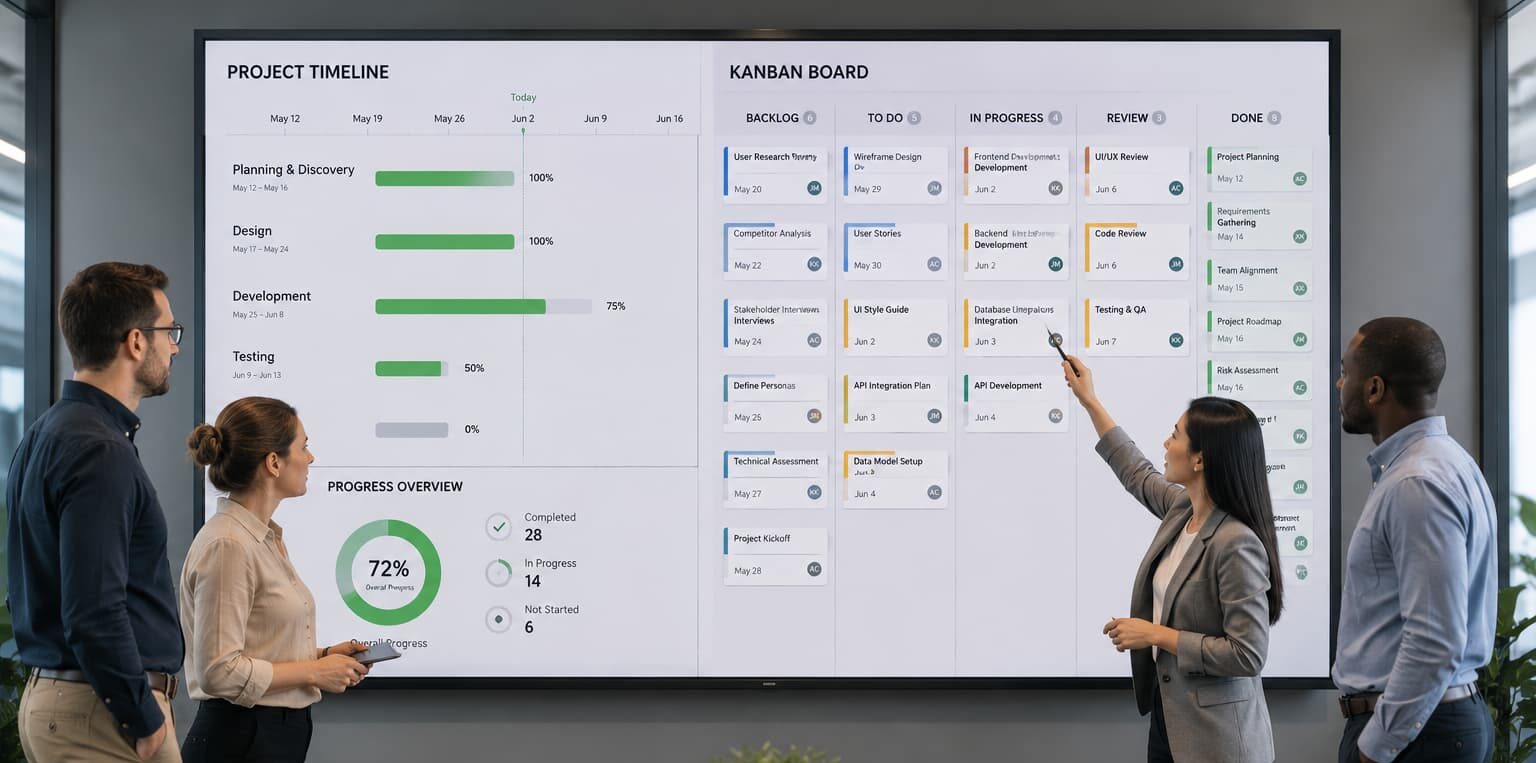
Strategy is cheap. Execution is where businesses win or lose. Project management skills are what move a good plan off the whiteboard and into daily operations.
This means sequencing work, assigning ownership, setting deadlines, and closing the loop when something slips. Impact-led thinking keeps the focus on high-impact solutions, not busywork. That matters when a founder has limited bandwidth and a long list of ideas.
Many businesses assume they just need better employees. In reality, they usually have a systems problem: good people stuck inside workflows that were never designed. Swapping staff rarely fixes it because a new hire inherits the same broken workflow, so the same failures repeat under a different name. Fixing business systems, not swapping staff, removes operational bottlenecks. Basic tech skills help too, since most process improvement now runs through the tools your team already uses.
Strategy-to-execution work is exactly where Four Indoor Courts aligns a founder’s vision with the day-to-day business systems that deliver it. That turns intent into operational efficiency and steady growth rather than another abandoned initiative.
How a fractional COO applies these skills to your business (getting started path)
Getting started is simpler than most founders expect. It starts with a conversation, not a contract.
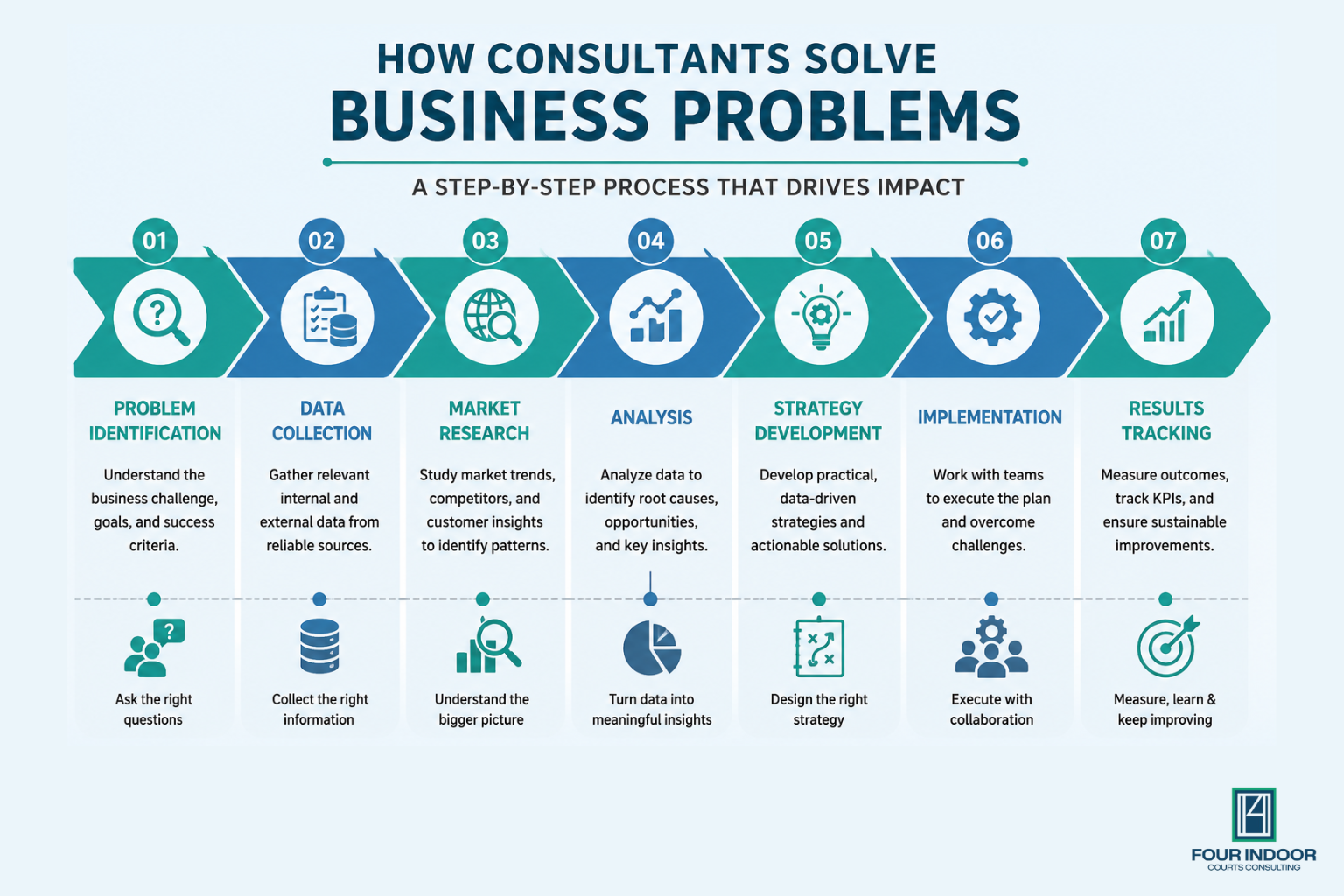
The typical path runs in three moves. First, a clarity call or readiness audit to understand what’s actually creating friction. Second, a diagnosis phase where analytical skills and KPI tracking surface the real operational bottlenecks. Third, an execution phase where strategic planning and project management skills turn findings into changes your team can actually sustain.
What makes the fractional model work is proportionality. You get COO-level expertise applied to your specific constraints without the overhead of a full-time hire. A fractional COO can start in an advisory role, then move into deeper integration as needs grow. That keeps the engagement matched to where you are. For founders who want a structured entry point, The Architect fractional leadership package is built around exactly this kind of staged involvement.
Good client relationship management matters throughout, because operations consulting only sticks when the founder and operator work as partners. The reason partnership beats a hands-off report is simple: the founder holds the context and the authority to change how the business runs, and an outside operator can only move as fast as that trust allows. The goal is to improve processes and performance in a way that outlasts the engagement, supporting steady growth long after.
Fractional COO vs. hiring a management consultant: cost and ROI
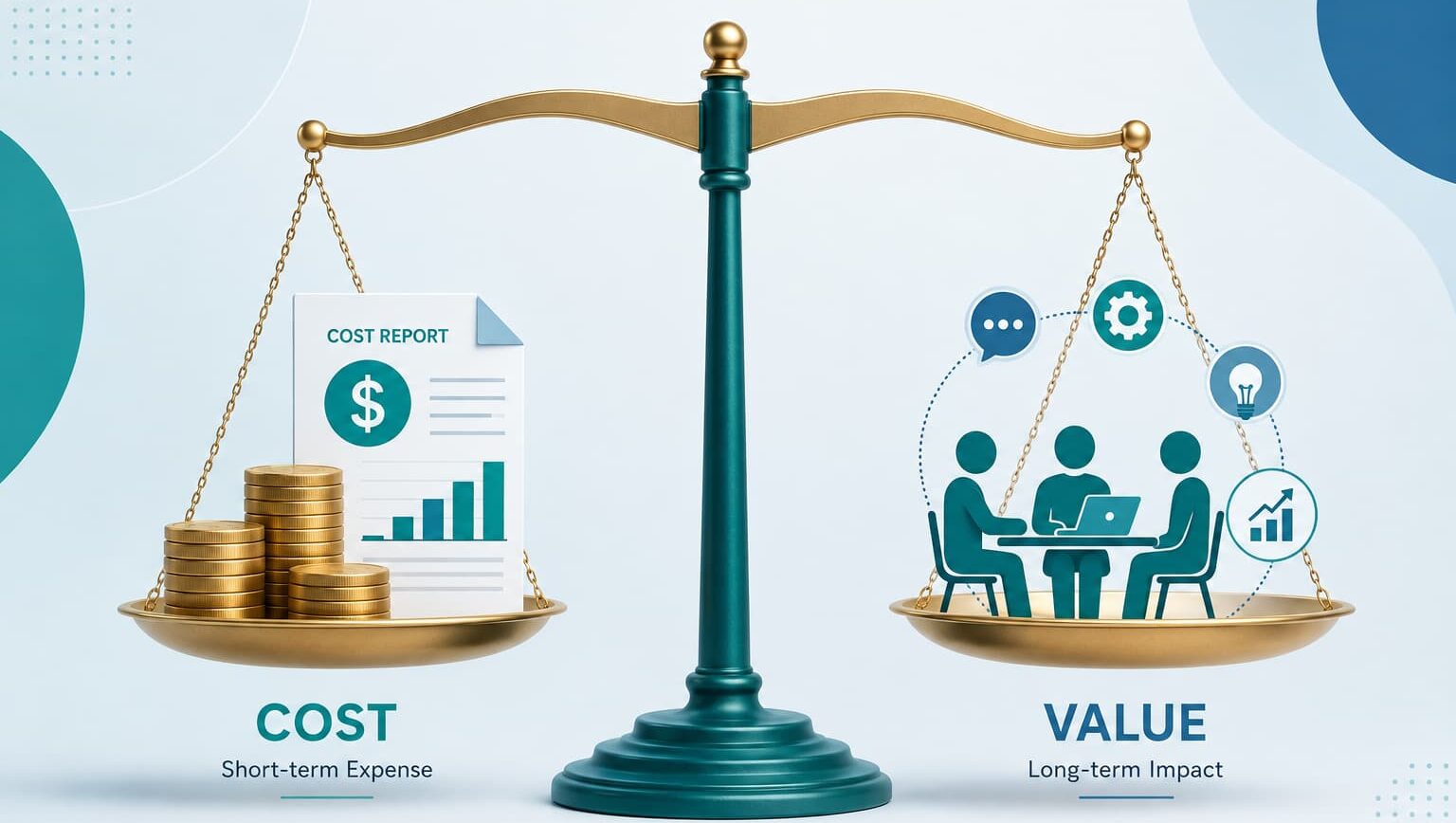
A traditional management consultant diagnoses and hands you a deck. A fractional COO diagnoses, then stays to implement. That difference is the whole ROI conversation.
Fractional COO costs typically run at a fraction of a full-time executive salary. It often costs less over time than a large consulting firm’s project fee, because you’re paying for ongoing operational leadership rather than a one-time report. The value often shows up in operational efficiency, fewer operational bottlenecks, and the founder reclaiming time. These same management consulting skills, applied continuously instead of in a single engagement, are what can compound the return.
Where does this not apply? If your business is under real product-market fit pressure, no amount of operations consulting fixes a demand problem first. Fractional support tends to pay off most when revenue exists, but structure doesn’t. That’s the exact pattern for founders scaling past $1M revenue. In the right situation, better strategic planning and operations can help reduce costs and support revenue, though results vary based on leadership execution, market conditions, and implementation.
If your business is growing faster than your systems can support, a clarity call can pinpoint where operational friction is quietly slowing you down. Four Indoor Courts offers a free 30-minute readiness audit with Leah Norris to help you see where your operations need structure before you commit to anything.
FAQs
Q1. Do I really need a fractional COO if my managers already handle operations?
A1.
Managers execute tasks; a fractional COO builds the systems and reporting that let managers succeed. If decisions still bottleneck through you, the structural gap exists regardless of how good your managers are.
Q2. Is a fractional COO worth the cost for a business just past $1M?
A2.
Honestly, not if your core problem is weak demand rather than weak operations. But if revenue is growing while structure lags, a fractional COO usually costs far less than the revenue lost to operational chaos.
Q3. What's the difference between a management consultant and a fractional COO?
A3.
A consultant typically diagnoses and delivers recommendations, then leaves. A fractional COO diagnoses and stays to implement, applying the same consulting skills to actually run the change.
Q4. What management consulting skills matter most for a small business?
A4.
Structured problem solving, analytical thinking, and communication skills matter most. Technical tools like financial modeling support these but never replace clear diagnosis and execution.
Q5. Can't I just apply these skills myself and save the money?
A5.
You can, and many founders start there. The limitation is time and objectivity: you’re too close to your own operational bottlenecks to diagnose them cleanly, which is where Four Indoor Courts often adds an outside read on where the real friction sits.

Founder of Four Indoor Courts Consulting, Leah Norris helps founders and growing businesses create operational clarity through fractional COO leadership, KPI-driven analytics, and scalable operational strategy. With a background spanning operations, finance, analytics, marketing, and technology, Leah specializes in helping businesses improve visibility, streamline processes, strengthen accountability, and build the operational structure needed for sustainable growth.